
From the marches beside Dr. King to historic presidential campaigns, Reverend Jesse Jackson’s life was a testament to faith and fearless leadership.
The Reverend Jesse Jackson, civil rights icon, passed away peacefully on February 17, 2026, at the age of 84, surrounded by his family in Chicago. A preacher, organizer, presidential candidate, and global advocate for human rights, Reverend Jackson’s life was a testament to faith in action.
"Hold your head high, stick your chest out. It gets dark sometimes, but morning comes. Keep hope alive.“

Early Roots: North Carolina A&T and the Power of HBCU
Born Jesse Louis Burns on October 8, 1941, in Greenville, South Carolina, Jesse Jackson's journey toward leadership began amid the rigid segregation of the Jim Crow South.
Long before he became a national figure, Jesse Jackson was a student at North Carolina Agricultural and Technical State University, one of the nation’s most historic HBCUs. His years at North Carolina A&T helped shape not only his intellect, but also his identity.
There, he thrived as quarterback for the Aggies football team (contributing to their 1964 CIAA championship) and emerged as a student leader, including serving as student body president.
Jackson often spoke passionately about the transformative power of Historically Black Colleges and Universities (HBCUs). He called them “engines of excellence” and “incubators of leadership,” crediting them for nurturing generations of Black professionals, activists, scientists, educators, and elected officials.
In his speeches, Jesse Jackson urged continued investment in HBCUs, insisting they were critical to closing wealth gaps and advancing economic justice. He advocated fiercely for federal funding and support, emphasizing their role in economic justice and cultural pride. His own success as an A&T alumnus stood as living testimony to their enduring power.
"No one should negotiate their dreams. Dreams must be free to flee and fly high. No government, no legislature, has a right to limit your dreams. You should never agree to surrender your dreams.“
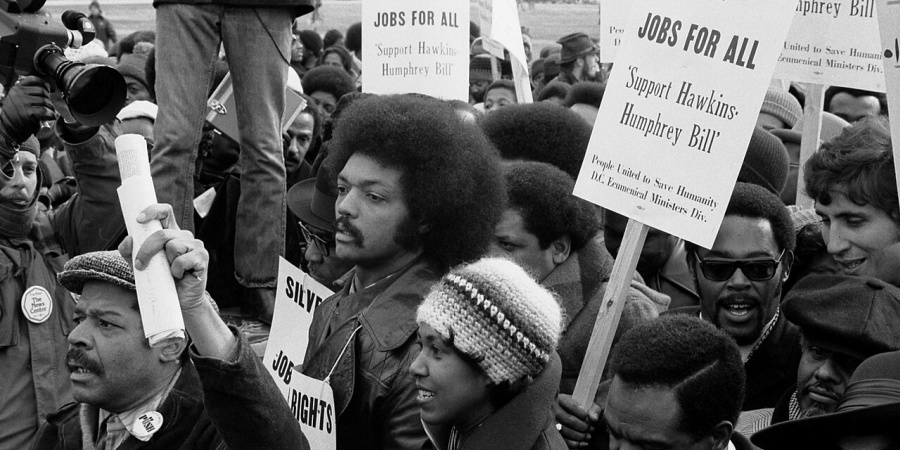
A Protégé of Martin Luther King Jr. and Architect of the Modern Civil Rights Movement
Reverend Jackson rose to national prominence under the mentorship of Rev. Dr. Martin Luther King Jr., He worked closely with Dr. King in the Southern Christian Leadership Conference (SCLC), playing a visible role in voter registration drives, economic justice campaigns, and the Poor People’s Campaign.
He was present in Memphis in 1968 during the sanitation workers’ strike when Dr. King was. assassinated—an event that would forever mark his life and mission. After King’s death, Jackson emerged as one of the most recognizable heirs to the movement’s moral authority. Where others saw despair, he saw unfinished work.
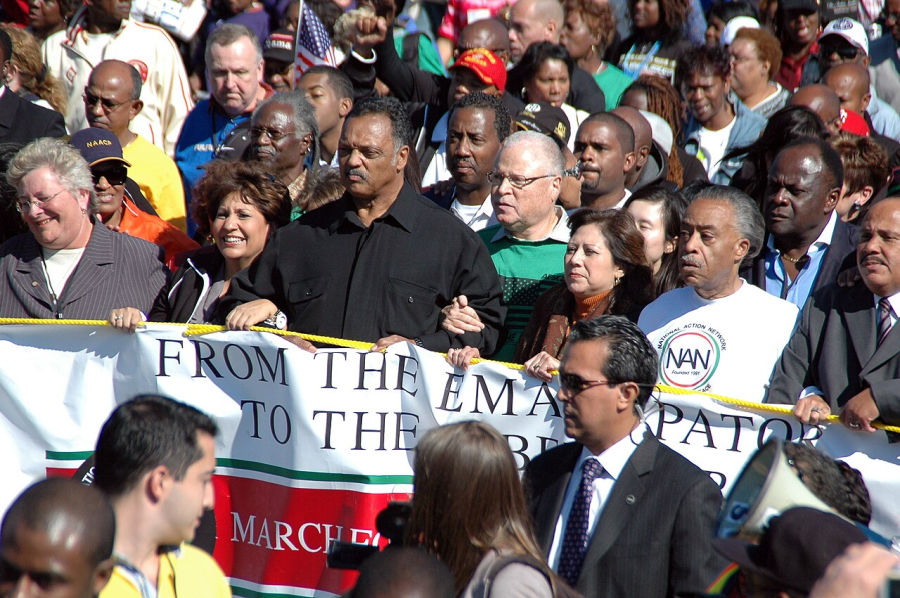
Operation PUSH and the Rainbow Coalition
In 1971, Jesse Jackson founded Operation PUSH (People United to Save Humanity), focusing on economic empowerment, corporate accountability, and educational opportunity. The organization would later merge into the Rainbow Coalition, building a multiracial, multi-ethnic alliance of working-class Americans.
The Rainbow Coalition was visionary—uniting Black, Latino, White rural, labor, and marginalized communities around shared economic interests. Jackson believed justice was not a zero-sum game; expanding opportunity for one group expanded it for all.
His activism expanded globally, advocating for peace in the Middle East, anti-apartheid efforts in South Africa, and humanitarian diplomacy across continents.

Historic Presidential Campaigns That Reshaped American Politics ( Run Jesse Run! )
In 1984 and 1988, Jesse Jackson ran for President of the United States. Though he did not win the Democratic nomination, his campaigns were historic.
They redefined what was politically possible for African Americans in national politics. He won millions of votes, carried multiple states, and forced issues like voting rights, economic justice, healthcare, and education equity into the center of national debate.

Illness, Final Years and Legacy
In 2017, Reverend Jackson publicly announced that he had been diagnosed with Parkinson’s disease. Even as illness slowed his physical movements, it never diminished his moral clarity.
In his later years, he appeared less frequently but remained a symbol of resilience. He continued to advocate for voting rights, economic fairness, and peace.
Jesse Jackson's legacy is a symphony of hope. He taught that justice is not a destination but a relentless march; that "keep hope alive" is not mere slogan but a call to action. From HBCU campuses to global stages—his activism expanded globally, advocating for peace in the Middle East, anti-apartheid efforts in South Africa, and humanitarian diplomacy across continents. He negotiated hostage releases in Cuba, Syria, Yugoslavia, and beyond—he lifted the voiceless and challenged the powerful.
As the accolades and tributes from around the world pour in, we are reminded that Reverend Jackson is part of an enduring tradition, of great African American leaders, on whose shoulders we proudly stand. We can never pay Reverend Jackson back, but ... yes we can, and we will, pay it forward.


