
Edward Waters University (EWU), Florida’s first private independent institution of higher learning and the state’s first Historically Black College and University (HBCU), has recorded its strongest fall enrollment in more than 20 years.
After fall registration closed on Friday, August 14, 2026, the university reported 1,281 students for Fall 2026. The figure marks a 5.4 percent increase over Fall 2025 and a 37.4 percent rise since Fall 2019, when enrollment stood at 932. It is the largest student body Edward Waters University has enrolled in over two decades and places the institution only 39 students short of the highest enrollment ever achieved in its 160-year history.
Edward Waters University: A Story of Performance
“Edward Waters University is no longer a story about potential. It is a story about performance,” said EWU President and CEO Dr. A. Zachary Faison, Jr. “In a national higher education environment that has been unforgiving to institutions of our size and type, this University has grown, and grown again. That does not happen by accident, and it does not happen because of any one person. It happens because a community of extraordinary professionals decided that our students were worth an extraordinary effort. And let me say plainly what this number puts within reach: the all-time enrollment record in the 160-year history of this institution. We are 39 students away from it. We intend to break it.”
Edward Waters Growth Against National Headwinds
The milestone stands out against broader trends in American higher education, which continue to face demographic declines, enrollment volatility, and financial strain on small private colleges. Since 2019, EWU has increased enrollment by 37 percent while posting six consecutive years of operating surpluses and more than tripling its endowment—from $2.8 million to $8.6 million, an increase of more than 200 percent.
"The market did not get easier. We got better,” Dr. Faison continued. “Our growth has not come at the expense of our financial discipline or our academic integrity. We have grown enrollment, grown the endowment, balanced the budget every single year, and last December completed a full decennial reaffirmation of accreditation by the Southern Association of Colleges and Schools Commission on Colleges with zero recommendations. That combination is rare anywhere in American higher education.“
Edward Waters Record New and Graduate Student Numbers
Fall 2026 brought 674 new students to campus, a gain of 90 students or 15.4 percent over the prior year. First-time-in-college freshmen totaled 287, up 7.5 percent. Transfer enrollment rose sharply to 209 students, a 34.8 percent increase that reflects growing interest from students seeking personalized support and strong outcomes. New graduate enrollment reached 119 students, a 14.4 percent rise over Fall 2025.
The university received more than 13,000 applications for the 2026–2027 academic year, continuing a multi-year expansion of national interest. Since launching its first graduate programs in 2021, total graduate enrollment has climbed to 149 students—an 12 percent increase over last year—across master’s programs in Cybersecurity, Business Administration, Education Policy & Advocacy, and Public Administration.
“This outcome belongs to a team that refused to let a single student fall through the cracks,” said Kendrick T. Dunklin, Vice President for Enrollment Management and Strategic Matriculant Services. “Our Admissions, Financial Aid, Student Accounts, and Registrar staffs worked calls, emails, and text messages every single day through the close of registration, and they did it in close partnership with Academic Affairs, Student Success, Athletics, our Band and Choir programs, and colleagues across this campus. When a student ran into a barrier, somebody here picked up the phone and worked it until it was solved. That is what produced this number, and I could not be prouder of this team.”
Collaborative Effort Across Campus
Dr. Faison credited the university’s cross-institutional Strategic Enrollment and Retention Team (S.E.R.T.), led by Vice President Dunklin. The team worked closely with Admissions, Financial Aid, Student Accounts, the Registrar, Academic Affairs, University College, Student Success, and Athletics. “What makes this accomplishment meaningful is that it was achieved across traditional institutional silos,” Dr. Faison said. “Nobody protected their territory. Everybody protected our students.” Retention also remained strong, with 82.9 percent of eligible students returning from spring 2026 to fall 2026.
Academic Profile of the Edward Waters Class of 2030
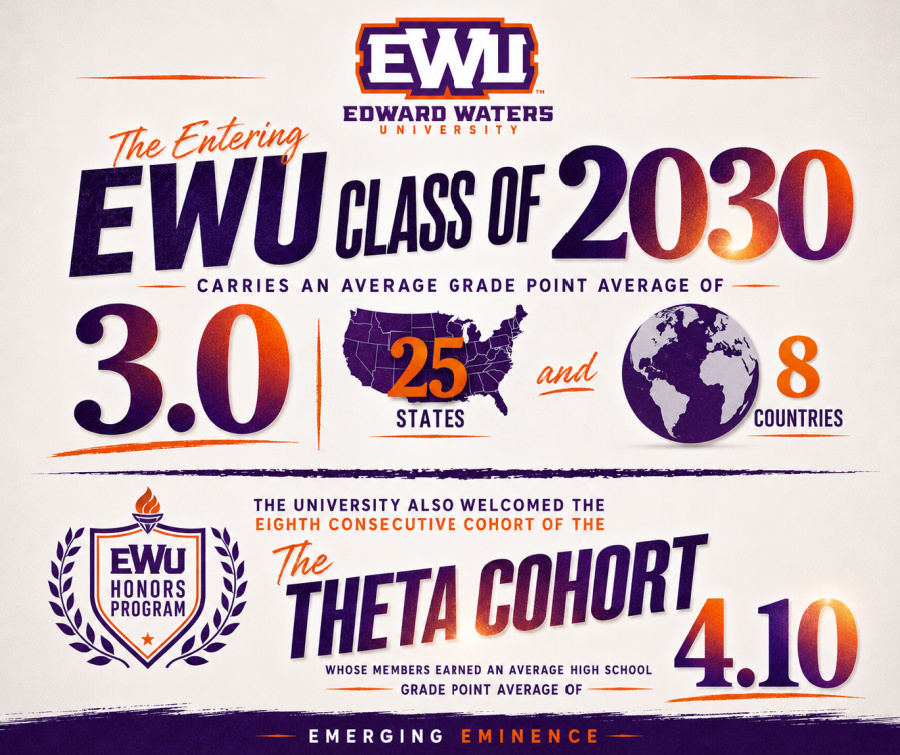
Members of the entering Class of 2030 carry an average high school grade point average of 3.0 and represent 25 states and eight countries. The university also welcomed the eighth consecutive cohort of its Honors Program—the “Theta Cohort”—whose members earned an average high school GPA of 4.10.
About Edward Waters University (EWU)
Edward Waters University (EWU), accredited by the Southern Association of Colleges and Schools Commission on Colleges (SACSCOC) and a member of the United Negro College Fund (UNCF), is a private, historically Black, urban institution of higher education. Founded in 1866 and affiliated with the African Methodist Episcopal Church, EWU is the first private and independent institution of higher education in the State of Florida. It offers a liberal arts education grounded in Christian principles of high moral and spiritual values.
About Dr. A. Zachary Faison, Jr.
Dr. A. Zachary Faison, Jr. is President and Chief Executive Officer of Edward Waters University. Since assuming the presidency in 2018, he has led a comprehensive institutional transformation focused on enrollment growth, financial stability, academic expansion, and student success. Under his leadership, EWU has achieved sustained enrollment increases, six consecutive years of operating surpluses, significant endowment growth, and successful reaffirmation of accreditation. About Edward Waters University


